Your Favorite Cop Show

What a great and simple question…. this is re-press from “The Bright Blue Line” by Chief Scott Silverii.  Follow him on his blog and on Twitter @ThibodauxChief.

Your Favorite Cop Show.

Posted in Communication | Leave a comment

Getting It First or Getting It Right

This just became one of my favourite blog posts ever.

I’m not going to say anything about it. I’m just going to ask you to read it and understand exactly what Jim Garrow (@jgarrow) is saying here:

From “The Face of the Matter”

http://faceofthematter.com/2013/04/26/getting-it-first-or-getting-it-right/

We talked yesterday about Dr. Reynolds’ CERC model for emergency risk communication (and what a huge fan of the curriculum I am), and the three main tenets: be first, be credible, be right. Sounds good in a training, and it reads wonderfully as a best practice, but how doable is it really?

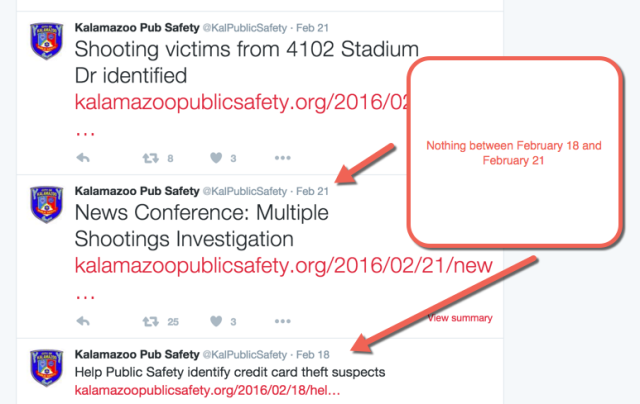
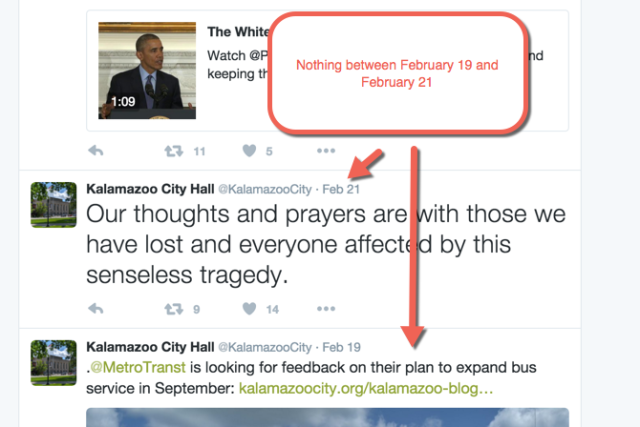
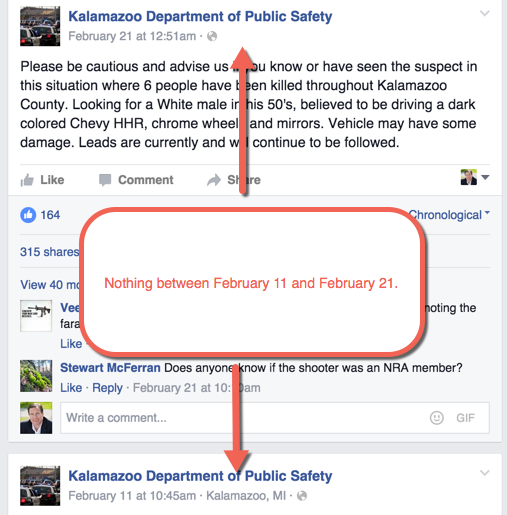
Turns out not so much. And the Boston bombings were a perfect example of the tradeoffs made when folks, including the media, try to do all three at once. Being first is easiest, being right is hard (and frankly, can be a moving target), and credibility suffers if you mess up either of the other two. Unfortunately, examples of failure can be found on just about any day from that week. From the reports of unexploded bombs being found, to inflated death counts, to mistaken accusations, to reports of the second bomber being caught (before he actually was, obviously). A lot of this can be attributed to the fog of the situation, but how much went unverified because it was too much work to untangle the less-than-truths, and besides it’s so darn foggy, anyways.

Most of the late night joke fodder centered around the mass media (especially CNN and the New York Post), but I think we’ve all got some skin in the game. How many of us didn’t check multiple reports before retweeting something? I could give the blow-by-blow, but it’s too sad. A simple Google search for, “news organization got it wrong in Boston,” is depressing enough.

cjr

It got so bad that the FBI had to release a statement–like some small-town sheriff dealing with an overzealous national media for the first time–admonishing the press. The Boston Police, like experts in crisis communications, took to the source of many of the rumors, Twitter, to try to unring the social media bell.

The problem is that while we understand that unsourced social media reports aren’t to be necessarily trusted, the media, in their rush to be first, are starting to depend on these breaking news reports as initial sources. So when CNN says something’s true, it lends an air of credibility to something that’s little more than a rumor. And those reports have real consequences. One only needs to look at the market drop that followed the AP’s hacked tweet on a bomb at the White House.

More seriously, reports of a “dark-skinned” suspect lead many, including the junior crowd-sourcing detectives on Reddit to mistakenly finger Sunil Tripathi, a missing college student. Just this week, Sunil was found dead (apparently not connected with the witch hunt). The editors and owners of Reddit thought this such an egregious act, they subsequentlypublished an apology and reviewed their longstanding policy of not allowing g personal identification anywhere on the site. All in the name of getting it first.

The news isn’t all bad, though. Organizations like CBS and NBC and the New York Times got props for doing it right. Speaking of the Times, this whole episode reminded me of an article I’ve been saving since December. The Public Editor of the Times, after the Newtown shooting and there were similar calls for a return to real journalism, published an article that said this:

In the future, [reporter Wendy Ruderman] would prefer that everyone adhere to this rule: “We shouldn’t put anything in the paper without a name attached to it.” In other words, there would be no reliance on anonymous law enforcement officials.

Which I think is a pretty cool thing to say. But my favorite part is this:

The Times can’t get pulled into the maelstrom of Twitter-era news. It has to stand apart from those news sources that are getting information out in a fast, piecemeal and frequently inaccurate way. That process has its own appeal and its own valuable purpose. But The Times should be its authoritative and accurate counterbalance.

Because in a world where being first too frequently leads to disaster, being right is the most valuable thing a news organization can do. That’s where their credibility comes from, that’s the hook that will move mass media into the future. They will never compete with social media, and they shouldn’t try to. As one of my favorite Tweeters said:

dv

Posted in Communication, Reputation Management | Tagged , , , | 1 Comment

Using emotions for sharing

  • Kittens
  • Babies
  • Puppies
  • Sunsets
  • Erotica
  • Nostalgia
  • Food
  • Comedy399971_598740650138402_1200905755_n

What do all of these things (and many more) have in common?  They all are things that grab our emotions on one level or another. Seriously, who thinks the world needs another playful and cute kitten video?  I know I don’t, but I can guarantee that there will be videos and pictures shared today of kittens.

You want to grab someones attention?  Hit them in the emotional epi-center of their lives.

This isn’t a new concept.  It’s been around for years and years.  I’m sure it’s taught in all the best schools of advertising, marketing and branding.  Get someone emotionally attached to you, your products, your services and you will have greater loyalty.

When a video of police laying the boots to someone surfaces, it doesn’t matter whether the person is deserving of it.  Often it doesn’t matter what the person did.  Sympathy for the ‘victim’ will be great… it’s based on the emotions evoked by just the visual image.

The Boston Marathon Bombings and the events that followed had many of glued to the television and computer screens.  For hours, there was no new information but we couldn’t pull away.  Why? Emotions kept us sitting there, glued, transfixed.

The emotional grab can work for you or against you.

If you want your information shared, attach an emotion to it in some way.  You will certainly increase your odds of shares just by doing that, but add in these two gems and you’ll be golden:

  1. Make it great content
  2. Ensure the value of the content is on the end-user / receiverScreen shot 2013-04-25 at 9.22.38 AM


Posted in Communication, Tips | Tagged , , , | Leave a comment

Time Sensitive Information and Sharing

BREAKING NEWS:

AMBER ALERT : Edmonton, Kentucky,Quebec license plate (Quebec 72B 381).

“A Little girl, 3 yrs. old picked up by a man driving a gray car, license plate: Quebec 72B 381. Canada. Reblog this. It could save her. The Kidnapping is recent so do it.”

Holy crap… a little 3 year old girl has been grabbed.  I better share this on Twitter, Facebook, Tumbler, Pinterest and my blog right away!  Getting as much information out there as fast as possible will save her!

Naturally, that is what a police or law enforcement agency wants.  That wildfire spread of urgent information to get as many boots on the ground and eyes around town looking.  And people WANT to help out.  They truly want to share the information.

The problem is, the above story has occurred in Florida, Arkasas, New York, Pennsylvania, Vermont, Texas, involving the same car, same licence plate and same 3 year old little girl.

This isn’t the only situation that you have to consider this a problem.  Think about anything that has an expiry date.  How do you stop the sharing of information after it starts?  How do you ask your public, “Please share this information, but in three days you will have to remove it or you could be breaking the law.”?

Another example is the child that goes missing in the morning on the way to school.  By noon, the child is found safe and sound but for the next several days’ people are continuously sharing the information.

"Please share to help find this child safely and quickly"

“Please share to help find this child safely and quickly”

Problems

  • How do you ensure that your community doesn’t get desensitized to emergency information?
  • How can we make certain that the information is fresh and accurate? 
  • How do you continue to get the community to share information without over sharing or extended sharing?

Answer

  • You can’t.
  • You can’t control any information once you hit send. 
  • You can’t worry about an Amber Alert living on for three years.
  • You can’t stop information from going global.

You can’t because the alternative does not work anymore.  The alternative being, not sharing the information or sharing it only in the traditional formats.

What you can do it make certain that you equip your community for great sharing.  You educate them about what the sharing responsibility means and you take on some responsibilities of your own.

Tell your community right up front if there are any possible challenges to sharing the information.  For example, identifying a young offender in Ontario has a short time allowance and once it is over you can’t identify the person without further judicial approval.  Continuing to identify that person could be putting your public in legal hot water.  Tell them.  Adivse them, guide them.

Amber Alerts have an expiry date as well.  Why not put that expiry date right on the image you release?  Possibly even the link to Amber Alerts in your area so that people can verify prior to sharing?

Most importantly, you need to be monitoring your channels.  If you see any information get shared, verify it, check into and counsel your community.  When an expiry date occurs, tell the public, thank everyone who shared the information but ask them politely to stop sharing.  That can be a tricky fine line.

I don’t care if you have to tweet, “Thanks for sharing the information.  Thankfully XXXX was located at ZZZZZZ time.” One thousand times, you do it.   Because if you don’t correct the information, then at some point your community will become less inclined to help you out…and that would be tragic.

The other way that people will automatically become desensitized is a lack of priority to your information.  If you treat every missing person and every BOLO and every  community safety caution with an equal level of importance, sooner or later people won’t care, won’t stare and won’t share.

Remember, calls to action (please share, please RT, call if you see) are essential adds to your information when you are asking for the help.  They are also essential when you are thanking your public for helping.  Asking your public to share your thanks, your located alerts and your cancellations will help to get more attention to the second volley of information.

"Thank you. Mr Bunny has been located. Please share our thanks with your community."

“Thank you. Mr Bunny has been located. Please share our thanks with your community.”


Posted in Communication, Strategy | Tagged , , , , | 1 Comment

Is Improving Police an Impossible Task?

Is Improving Police an Impossible Task?.

Here is a very interesting article from a former Chief.  What are your thoughts on this?


Posted in Communication, Reputation Management | 1 Comment

To Be Continued…?

To Be Continued…?.

Here is a challenge that so many in Law Enforcement face.  There is a safety concern from something as simple as blogging or tweeting as well as the always present fear of, “tripping up” with opinions, thoughts or musings.

I wish SH all the best and hope the return is at a time when it is right.

Thank you for all you have shared.  You will be missed.


Posted in Communication, Reputation Management | Leave a comment

#CopChat, November 14th, A double meaning to “citizen police”?

Wednesday, November 14th, 2012

Over the weekend Christa happened to notice, affixed to the back windshields of several official police vehicles in her home state of South Carolina, ”Don’t Tread on Me” stickers. In the US this symbol, the Gadsden flag, has historical significance: it was used during the American Revolution as a standard for the nascent navy, established to intercept British warships. Moreover, it originated with a member of the Continental Congress, Col. Christopher Gadsden, who hailed from South Carolina.

The Gadsden flag has always represented American patriotism, but most recently has been co-opted as the flag for the conservative Tea Party. Which brought to mind the number of police officers online who are hardly shy about posting their political views, both conservative and liberal. And so we’re led to wonder:

Police: As public servants, should you care about how citizens view your political persuasions? Is a political view any different from a religious belief (or lack thereof) or sexual orientation? And can it, or does it, affect how you police people?

Civilians: Does knowing how your police vote affect whether you trust them for help when you need them? Or does it make you worry about jackbooted thuggery, whatever your own persuasion?

Join #copchat on Wednesday, November 14 at 9 p.m. Eastern as we discuss the answers to these questions and more!

Posted in Communication | Tagged , , , | Leave a comment

Guest Post - Dr Jez Phillips: What is Offender profiling?

Reblogged from Police-Led Intelligence:

Click to visit the original post

Today's guest post is from the blog of Dr Jez Phillips, a psychologist, Deputy Head of Psychology and senior lecturer at the University of Chester in the UK. Phillips has a particular interest in the field of forensic psychology. This is a broad area in itself, covering the application of psychology to diverse but related issues such as policing, criminal investigation, criminal action and the many elements of the criminal justice system.

Read more… 1,005 more words

Excellent post by Dr. Jez Phillips via Police-Led Intelligence.
Posted in Uncategorized | Leave a comment

#CopChat Wednesday, October 24, 2012

It’s on!

I’ve received a lot of questions regarding the attempted hijacking of the Twitter chat, #CopChat which happens every Wednesday night at 9pm eastern, 6pm Pacific.  To sum up the questions:

  • Should the hashtag change?
  • Should we move nights?
  • Does it bother me?

The answers:

  1. NO – The hashtag will remain. Changing it would serve no purpose since the Anonymous people would simply find it and it would start all over again.
  2. NO – Same as above
  3. YES – But probably not for the reason you’d think.  It does make it harder to follow the chat and there are some really good questions and conversations that are getting over shadowed.

The reason it really bothers me is that I will make the assumption that the folks who are, and support Anonymous complain, whine, point out problems and RT each other like lemmings, is because they are unhappy with the system and the perceived lack of justice or the real injustices that occur in the police and societal systems.

What do they do? Spam, hijack, yell and accuse.  So much so that they end up being ignored.  Think about that… they have an audience of online police and members of the public that are working towards positive change and instead of joining the conversation, they ostracize themselves within the group.  They could be part of the solution and the change, but instead they are just a nuisance at best.

They have an audience that will listen and may possibly help lead the charge for change and they have successfully ended up being ignored.  Kind of ironic.  The end result, no one listens to them, no one supports them (except themselves) and in the end, the get no attention and worse, no hope for changing the system they want to see changed.  WAY TO GO!!

Will #copchat stop? Nope

Will #copchat change? Nope (except get bigger, better and more relevant)

Will Anon change their tactics to change the system? Only they can answer that, but from what I have seen and the evidence to support it shows, no. They will just continue to be ignored and make themselves irrelevant.

So call this a challenge to Anon… try a new tactic to become relevant and work with the people you want to change.  All the cops I know want to see the bad ones gone, the good ones praised and the great ones be the best role models possible.

Similar posts: http://tacmedia.wordpress.com/2012/09/13/you-know-youve-scared-people-when/

Posted in Uncategorized | 31 Comments

Please like me, follow me, subscribe to me…STOP IT!!

WHY?

On a pretty much daily basis the requests for people to follow, like, subscribe, etc show up in multiple feeds across social media platforms.

I don’t have a problem with these when you give me a reason to do it.  In fact, I believe when done right it is an excellent way to increase your audience and voice in social media. I do have a huge problem with it when you don’t give me any value or reason why I should be doing it.  That’s the difference.  Value driven request vs numbers driven plea.

When I see those requests I generally take a look at the persons presence on the web. I look at other platforms they are using, who and what they associate to and most importantly, what information they are sharing, talking about and providing.  Let’s face it… our time is valuable so we do need to know what we are getting since there is a strong likelihood that by taking in their information, you could be missing information from others.

The information you post is the greatest determining factor to whether or not your presence will grow and more importantly, whether others will share your information.  It is of a far greater importance that your information is seen by people beyond your immediate span of influence and reaches those who you don’t even know.

How do you reach your unknown audience?

The answer is simple in planning but not so easy in application.  Provide great content.  I can guarantee you that when you provide great content, the odds increase dramatically that your information will be seen by others, shared by others and engaged by others without your concerted effort.  When you provide that great content and ad into it the request for likes, shares, subscribers and all the other ways to get followed, then you have hit the ball out of the park.

Don’t just ask, give a reason and justify why your potential audience should share their time with you.

I’ll value your time!

Posted in Communication, Strategy, Tips | Tagged , , | Leave a comment